Observe
What did Dalrymple actually see?
Before interpretation, before opinion, before theory — identify the concrete symptom. The exact phrase. The behavior. The social scene. The contradiction. The moral evasion.
A 90-day guided reading companion that turns Theodore Dalrymple's essential essays into a daily practice of clinical cultural diagnosis — so you can name what you have been seeing for years without shouting, retreating, or sounding like a political talking point.
Digital PDF companion. Instant access. Designed for serious readers, not passive skimmers.
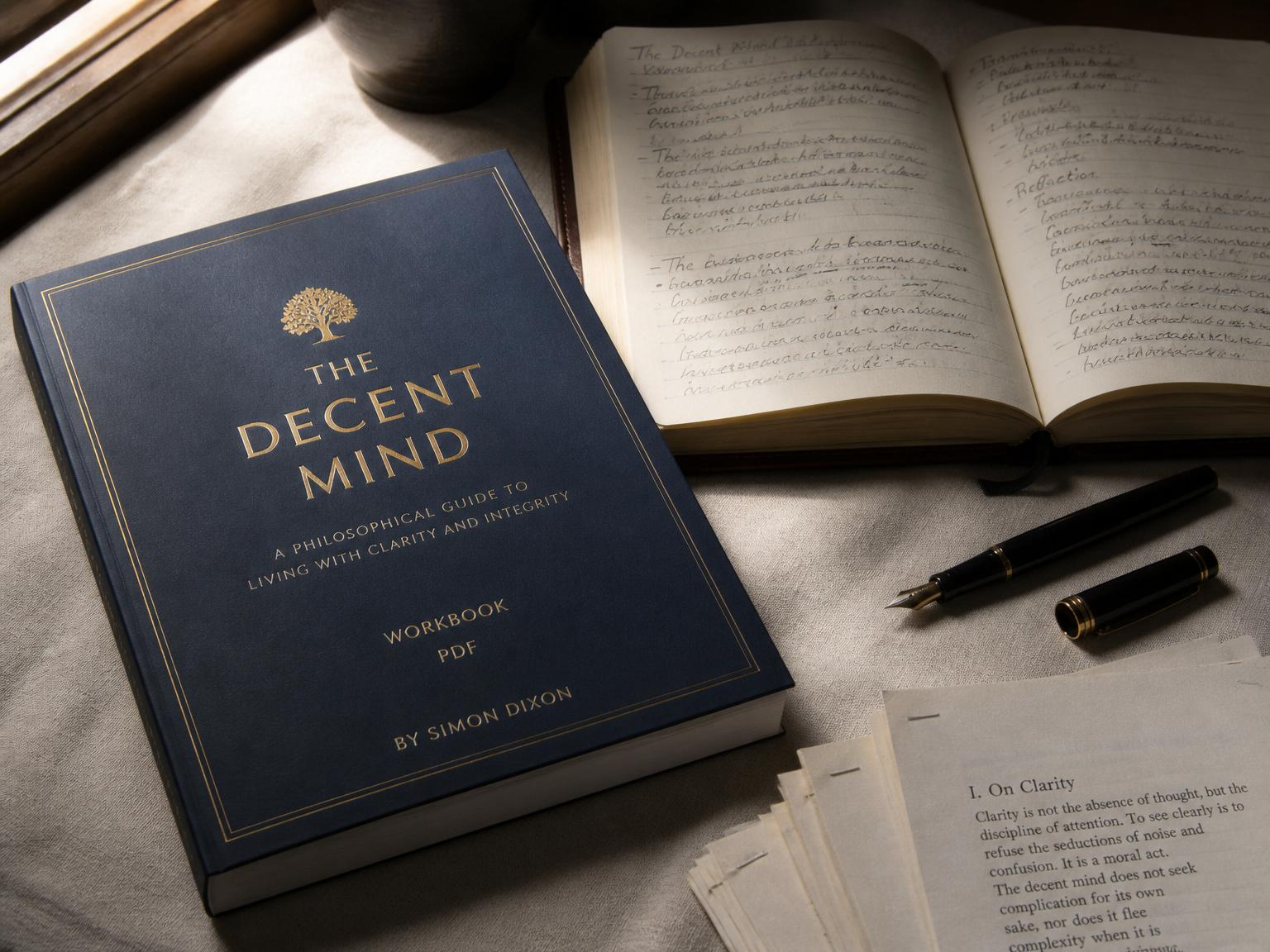
You bought the book. Or you read an essay online and felt the strange relief of recognition: finally, someone sees it.
Then the archive opened in front of you — hundreds of essays, decades of observations, recurring concepts, clinical cases, moral patterns — and no obvious way through.
So you read a few. You underline. You agree. You feel the clarity for an evening. Then life resumes. The insight fades. The language disappears exactly when you need it.
A great essay can make you feel seen. But recognition is not the same as formation.
If you keep reading without structure, the pattern repeats:
You discover a sentence. You feel the shock of clarity. You send it to someone. Then, a week later, the concept is gone — and the next difficult conversation finds you without words again.
The cost is not merely unfinished reading. The cost is remaining inarticulate about the things you most need to name.
Dalrymple did not write disconnected essays. He performed the same act of clinical diagnosis again and again: a criminal's grammar, a failing school, a broken family, a dying faith, a drug epidemic, a welfare neighborhood, a therapeutic excuse.
Each essay is a case file.
This companion teaches you how to read those case files actively. Not to collect quotes. Not to win arguments. But to learn the method of seeing.
Three moves repeated for 90 days until clarity becomes a habit.
What did Dalrymple actually see?
Before interpretation, before opinion, before theory — identify the concrete symptom. The exact phrase. The behavior. The social scene. The contradiction. The moral evasion.
What belief produced what he saw?
Trace the idea underneath the behavior. What worldview made this possible? Where did it come from? Who exported it? Who pays for it?
Where does the pattern appear now?
Carry the diagnosis into your own world — your family, city, church, news, institutions. Then write one sentence that names it without retreating and without throwing a grenade.
Observe what he saw. Find the mechanism. Translate it to your world.
90 Days Through Dalrymple's Essential Essays
A guided PDF workbook for readers who want to go beyond admiration and begin training the habit of clinical cultural diagnosis.
Inside, you move through the essential essays in a deliberate sequence: five reading days per week, one consolidation day, one rest day, and thirteen weekly movements that build from simple observations to deeper cultural mechanisms.
Each reading day gives you
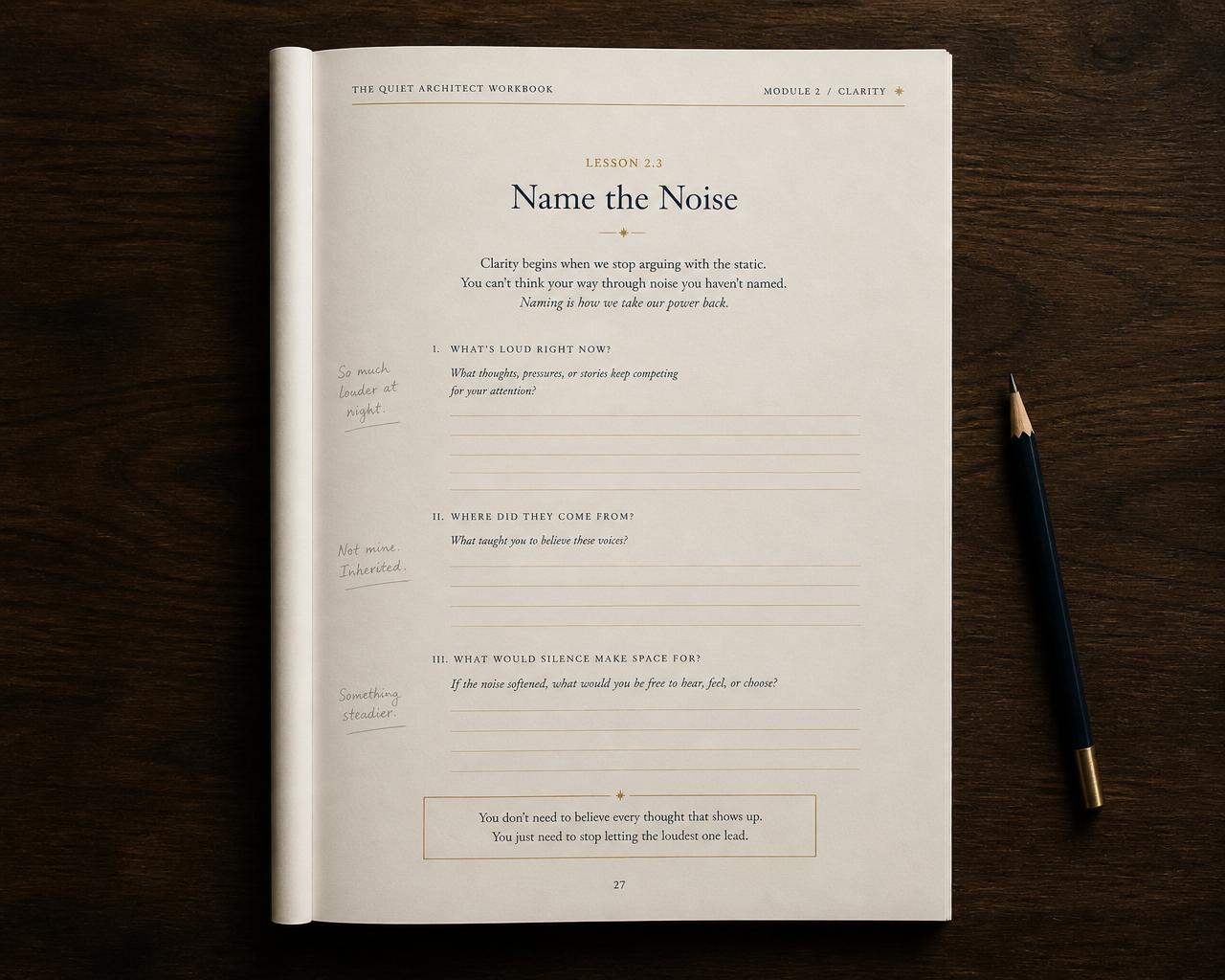
The weekly consolidation rhythm turns insight into memory instead of letting it disappear after one evening.
Instead of saying “everything is falling apart,” you begin asking: What is the symptom? What is the belief? Where did it come from?
Each essay ends with translation: one modern parallel and one sentence you could actually say out loud.
The product does not train outrage. It trains clarity.
By the end, you have a notebook full of observations, mechanisms, and translations — in your own words.
From scattered recognition to trained diagnosis.
— The core promise
The Practice
Included Bonuses
Bonus I
A one-page printable reference for the Observe / Mechanism / Translate method.
Bonus II
A framework for organizing the major concepts you encounter along the way.
Bonus III
A printable tracker to keep the practice visible and satisfying.
Bonus IV
Precise, non-inflammatory sentence frames drawn from the companion's method.
A worked example from one of Dalrymple's most well-known observations — "The knife went in."
Dalrymple notices that men convicted of stabbing often describe the act passively:
"The knife went in."
The grammar removes the actor from the action.
The phrase reveals more than evasion. It reflects a worldview in which actions happen to people rather than being done by them.
The belief underneath: "I am not fully the author of my own actions."
Modern parallel:
"mistakes were made" · "I was going through something" · "the addiction took over."
"Notice how often the hardest moments in our lives get described as things that happened to us, not things we did — and what changes the moment we put ourselves back in the sentence."
The companion's promise made practical: not just reading Dalrymple, but learning to perform the diagnosis yourself.
"After three days, I finally understood how to read Dalrymple actively instead of just underlining him."
"This gave me language for things I had felt for years but could never say clearly."
The practice is designed for 15 minutes a day. Five reading days, one consolidation day, one rest day.
That is exactly why the companion exists. It gives you the path and the prompts.
The book gives you the essays. The companion gives you the discipline to use them.
The method is simple: observe, identify the mechanism, translate. Serious does not have to mean complicated.
No. The companion is about clinical cultural diagnosis, not partisan shouting.
The structure is intentionally small and repetitive. It is built to compound slowly.
Open the companion. Complete the first three reading days. If you do not feel that it gives you a clearer, more usable way to read Dalrymple, request a refund within 7 days.
No drama. No pressure.
The product exists to create clarity. If it does not do that for you, you should not have to keep it.
You receive
Today
€19,90
Begin the 90-Day ApprenticeshipInstant digital access. Read at your own pace. Built for 15 minutes a day.
It is a digital PDF reading companion and workbook.
The companion guides you through the essays and tells you what to read. Some essays live in books or archives. The companion is a guide, not a replacement for the original works.
About 15 minutes a day on reading days.
No. It is a self-paced reading companion and diagnostic workbook.
No. It is a disciplined reading practice focused on clinical cultural diagnosis, moral clarity, and intellectual formation.
Readers who sense that something has gone wrong in modern culture and want precise, calm, serious language for understanding it.
It is not for people looking for outrage, partisan talking points, quick summaries, or passive entertainment.
The practice is self-paced. The 90-day structure gives you a path, not a punishment.
Yes. Complete the first three days. If the companion does not clarify your reading, request a refund within 7 days.
You already know something is wrong.
The question is whether you will keep feeling it vaguely — or begin learning how to name it with precision.
The Decent Mind Reading Companion gives you the path: 90 days, 15 minutes at a time, through the essays that teach you not only what Dalrymple saw, but how to see.
Instant access · 7-day clarity guarantee · Designed for serious readers